Do UK Citizens Need a Visa for Morocco?
No, UK citizens do not need a visa to visit Morocco for tourism or business stays of up to 90 days. British passport holders can enter Morocco visa-free and simply need a valid passport, which will be stamped on arrival. This makes Morocco one of the most accessible North African destinations for British travellers.
The visa-free arrangement applies to holders of a full British citizen passport. If you plan to stay longer than 90 days or are travelling for purposes other than tourism, you will need to apply for a visa through the Moroccan Consulate General in the UK.
Morocco Entry Requirements for British Passport Holders
Even though no visa is required, UK citizens must meet several entry requirements when arriving in Morocco.
Passport Validity
Your passport must have an expiry date at least 3 months after your planned arrival date in Morocco. Moroccan authorities have denied entry to travellers with damaged passports, so check your document carefully before departure.
For organised group tours, the passport must cover at least the duration of your stay.
Documents to Carry at the Border
While you do not need a visa, border officials may ask for:
- A valid British citizen passport
- Proof of sufficient funds for your stay
- Proof of onward or return travel (return flight ticket)
- Documents showing the purpose of your trip (hotel booking, tour itinerary)
- Documents required for your next destination if Morocco is a transit point
Passport Stamp
Make sure the border official stamps your passport on entry. Some travellers have experienced difficulties leaving Morocco because their passport lacked an entry stamp. Check the stamp before leaving the immigration counter.
How Long Can UK Citizens Stay in Morocco Without a Visa?
British citizens can stay in Morocco for a maximum of 90 days without a visa. This applies to tourism and short business visits.
If you wish to extend your stay beyond 90 days, you must visit a Moroccan police station before your 90-day period expires and request an extension. Extensions are granted for an additional 90 days, giving a total possible stay of up to 180 days.
Overstaying without an extension can result in fines, detention, or a ban on future entry. Always keep track of your entry date and plan your extension well in advance.
When Do UK Citizens Need a Visa for Morocco?
You will need to apply for a Moroccan visa if:
- You plan to stay longer than 90 days
- You are travelling for work, employment, or long-term study
- You are not a British citizen (other passport types may have different requirements)
For non-tourism purposes, contact the Moroccan Consulate General in London to determine the correct visa category and application process.
Morocco e-Visa: An Option for Eligible Travellers
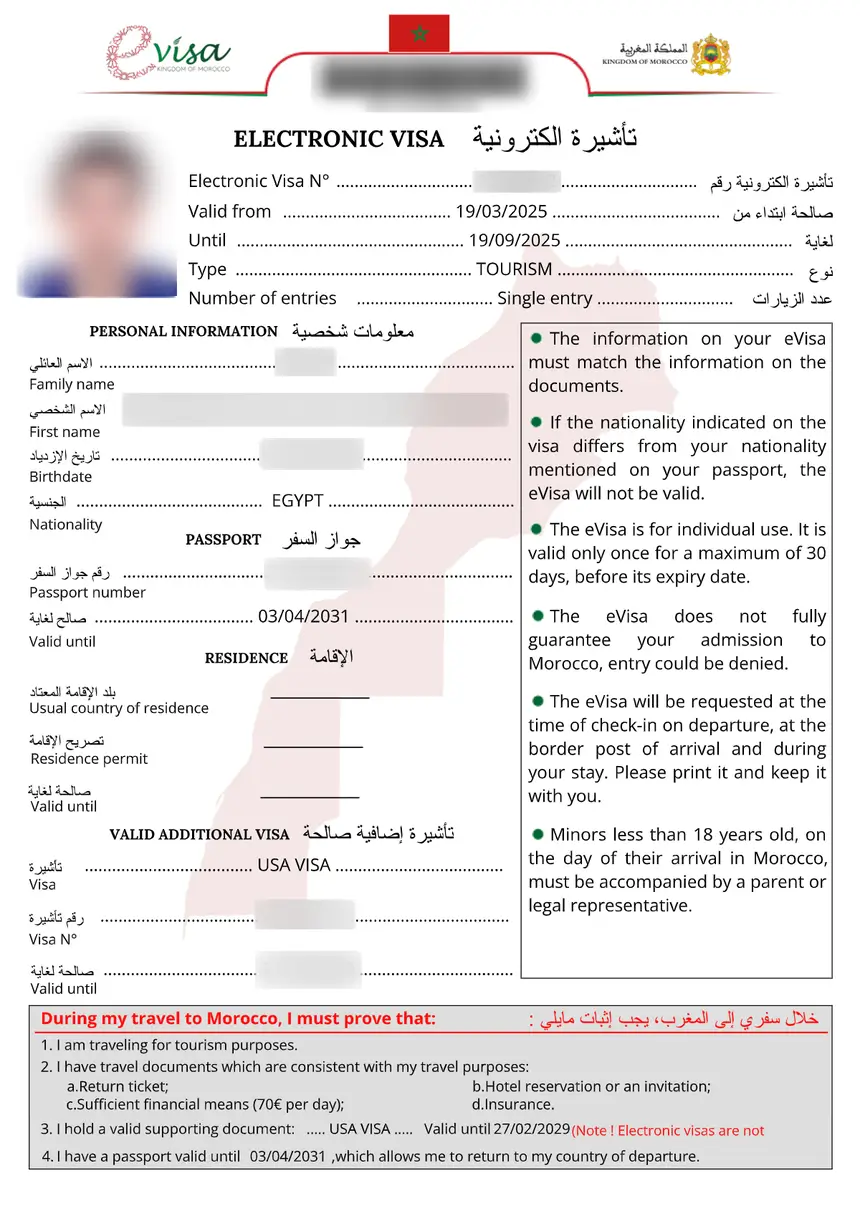
While UK citizens do not need a visa for short stays, Morocco launched an electronic visa (e-Visa) system in July 2022 through the official portal acces-maroc.ma. The e-Visa is designed for nationals of countries that do require a visa.
British citizens do not need to use the e-Visa system for stays under 90 days. However, if you hold dual nationality with a country that requires a visa, or if you need a visa for an extended stay, the e-Visa may be relevant.
The Morocco e-Visa details include:
| Feature | Details |
|---|---|
| Validity | 180 days from issue |
| Stay duration | Up to 30 days |
| Entry type | Single entry (convertible to multiple in-country) |
| Processing time | 24-72 hours (official portal) |
| Fee | Approximately 220 MAD (~$22) |
For a complete overview of the e-Visa system, see our Morocco e-Visa guide.
Morocco Visa Types for UK Travellers
While most UK visitors enter visa-free, it is helpful to understand the different Morocco visa types available:
- Tourist visa – For stays exceeding 90 days
- Business visa – For extended business activities
- Transit visa – For passing through Morocco to another destination
- Work visa – For employment in Morocco
- Student visa – For long-term study programmes
Each visa type has specific requirements and application procedures. Check our detailed Morocco visa requirements page for a full breakdown of documents needed.
Morocco Visa Processing Time from the UK
If you do need to apply for a visa (for stays over 90 days or non-tourism purposes), processing times vary depending on the application method:
| Application Method | Processing Time | Approximate Cost |
|---|---|---|
| Consular application | 5-15 working days | 220 MAD (~$23) single entry |
| e-Visa (if eligible) | 24-72 hours | ~220 MAD (~$22) |
| Third-party rush service | 2-4 days | $99 additional fee |
| Third-party super rush | 1-2 days | $129 additional fee |
For current processing times and fees, visit our Morocco visa processing time and Morocco visa fee pages.
Customs and Money Rules for UK Visitors
Morocco has specific customs regulations that UK travellers should know:
- Moroccan dirham: You can carry up to 2,000 MAD into or out of Morocco. The dirham is non-convertible and cannot easily be exchanged outside Morocco.
- Foreign currency: You must declare foreign currency worth 100,000 MAD or more (approximately $10,000) when entering or leaving the country. There is no limit on foreign cash you can carry, but amounts above the threshold must be declared.
- Prohibited items: Morocco has strict rules on goods that can be imported or exported. Declare anything that may be prohibited or subject to tax or duty.
Health Requirements for Morocco
If you are arriving from a polio-affected country, you must present a polio vaccination certificate. For most UK travellers arriving directly from the UK, no special vaccinations are required.
Recommended vaccinations include hepatitis A, hepatitis B, typhoid, and rabies (if planning outdoor activities). Consult TravelHealthPro’s Morocco guide for the latest health advisories before your trip.
Tips for UK Travellers Visiting Morocco
- Best time to visit: Spring (March to May) and autumn (September to November) offer pleasant weather for sightseeing
- Currency exchange: Exchange offices are available at airports, hotels, and banks. ATMs are widespread throughout Morocco. International Visa and MasterCard credit cards are accepted at most hotels and larger establishments.
- Language: Arabic and Berber are official languages. French is widely spoken. English is common in tourist areas.
- Safety: Morocco is generally considered safe for tourists. Exercise normal precautions, especially in crowded areas and markets.
FAQs About Morocco Visa for UK Citizens
Do UK citizens need an e-visa for Morocco?
No. UK citizens do not need an e-visa or any visa for tourism and business stays of up to 90 days. You can enter Morocco with just a valid British passport.
How much does a Morocco visa cost from the UK?
UK citizens do not need a visa for stays under 90 days, so there is no cost. If you need a visa for longer stays or non-tourism purposes, consular fees start at approximately 220 MAD (~$23) for a single-entry visa.
How long does it take to get a Moroccan visa from the UK?
If you need a visa, consular processing takes 5-15 working days. The e-Visa system processes applications in 24-72 hours, but UK citizens generally do not need either for short tourist visits.
Can I work in Morocco with a tourist entry?
No. The visa-free entry for UK citizens is for tourism and short business visits only. To work in Morocco, you must obtain a work visa before arrival through the Moroccan Consulate General in London.
What happens if I overstay 90 days in Morocco?
Overstaying without obtaining an extension from a Moroccan police station can result in fines, detention, or restrictions on future entry. Apply for an extension before your 90 days expire.
Is it safe to travel to Morocco right now?
Morocco is generally considered a safe destination for UK travellers. The UK government’s Foreign Travel Advice page provides the latest safety information and any travel warnings for Morocco.
Do I need travel insurance for Morocco?
While not legally required, travel insurance is strongly recommended. The UK government advises having comprehensive travel insurance that covers medical treatment and repatriation.