Nigerian passport holders need a visa to enter Morocco – there is no visa-free access and no visa on arrival for Nigerian citizens. However, Nigerians can apply for a consular visa through the Moroccan Embassy in Abuja, or use the Morocco e-Visa system if they hold a valid Schengen, US, UK, Canada, or Australia visa. This guide covers every step, visa requirements, and fee you need to know before travelling from Nigeria to Morocco.
Visa Options Available to Nigerian Citizens
Nigerian citizens do not qualify for visa-free entry to Morocco. Unlike nationals from the US, UK, EU, and many other countries who can enter Morocco without a visa for up to 90 days, Nigerians must obtain a visa before arrival.
Here are the options available:
| Visa Option | Available to Nigerians? | Details |
|---|---|---|
| Visa-free entry | No | Nigeria is not on Morocco’s visa-exemption list |
| Visa on arrival | No | Morocco does not offer visa on arrival to Nigerian passport holders |
| Standard e-Visa | No | Nigeria is not on the regular e-Visa eligible nationalities list |
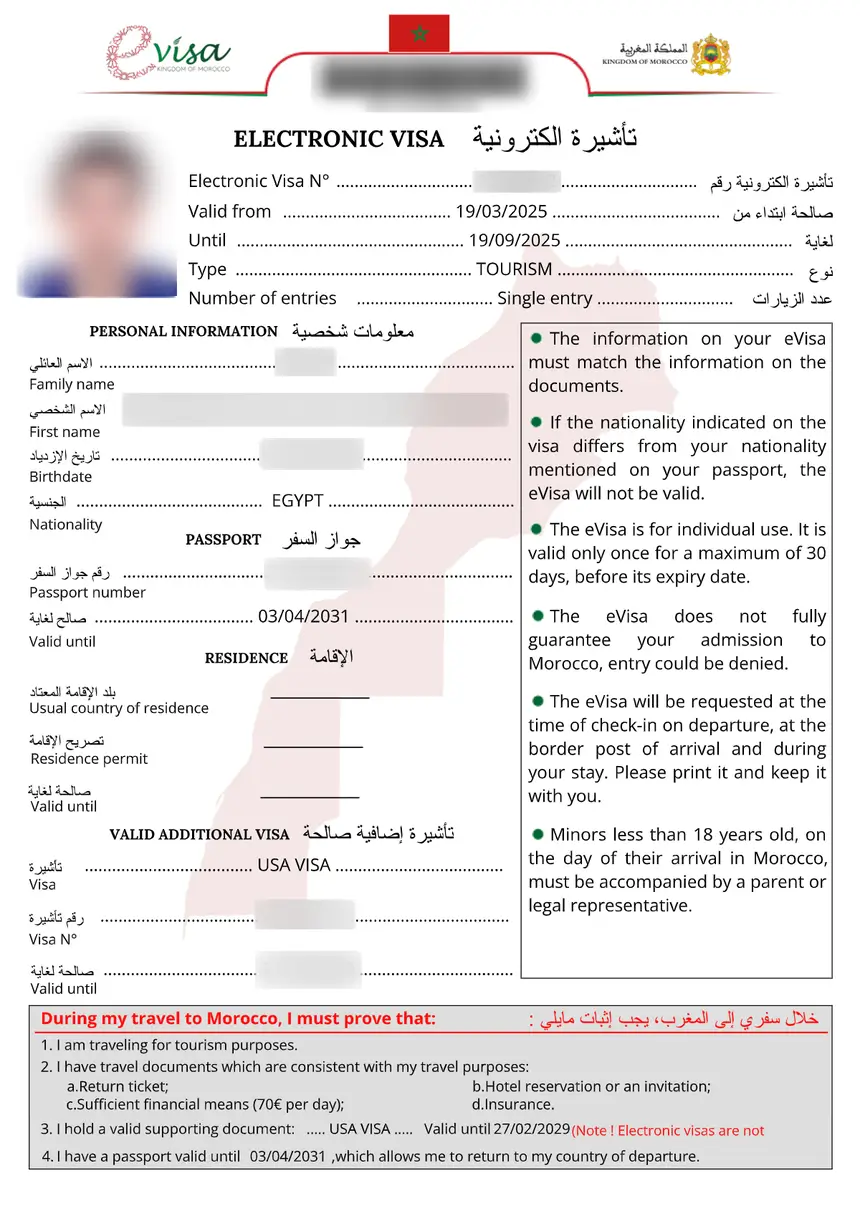
| Conditional e-Visa | Yes, with qualifying visa | Nigerians holding a valid Schengen, US, UK, Canada, or Australia visa/residence permit can apply |
| Consular visa (embassy) | Yes | Apply at the Moroccan Embassy in Abuja |
The most common route for Nigerian travellers is applying for a consular tourist visa at the embassy. If you already hold a qualifying visa from a Western country, the conditional e-Visa application offers a faster, fully online alternative.
Morocco e-Visa: Can Nigerians Apply?
Morocco launched its e-Visa system on July 10, 2022 to simplify the visa process for eligible nationalities. For a breakdown of all visa types available, see our dedicated guide. While Nigeria is not on the list of regular e-Visa eligible countries, Nigerian citizens can apply for a conditional e-Visa if they meet additional requirements.
Conditional e-Visa Eligibility
You can apply for a Morocco e-Visa as a Nigerian passport holder if you have a valid:
- Schengen visa (physically stamped in your passport)
- US visa (stamped in passport)
- UK visa (stamped in passport)
- Canadian visa (stamped in passport)
- Australian visa (stamped in passport)
- Permanent residence card from any of the above countries / EU / EEA
Only visas that are physically stamped in your passport count – e-visas or digital permits from other countries are not accepted as qualifying documents for the conditional Morocco e-Visa.
If you qualify, you can apply online through the official Acces Maroc portal, pay the fee, and receive your e-Visa by email.
e-Visa Details
- Stay duration: Up to 30 days per entry
- Entry type: Single entry
- Validity: 180 days from the date of issue
- Processing time: 5-7 business days
If you do not hold any of the qualifying visas listed above, you must apply for a standard consular visa at the Moroccan Embassy in Abuja, Nigeria.
How to Apply for a Morocco Visa from Nigeria
The consular visa process is straightforward but requires careful preparation. Follow these steps:
Step 1: Gather Required Documents
Collect all mandatory documents (listed in detail below). Ensure your passport has at least 6 months of validity remaining and at least 2 blank pages.
Step 2: Complete the Application Form
Download or collect the Moroccan visa application form. Fill it out completely and accurately – incomplete forms are a common reason for delays.
Step 3: Submit Your Application
Visit the Embassy of the Kingdom of Morocco in Abuja to submit your application in person. Some applicants may be able to submit through a VFS Global centre or an authorized visa agent.
Step 4: Pay the Visa Fee
Pay the applicable consular fee (see fee breakdown below). Payment methods vary – confirm accepted payment methods with the embassy before your visit.
Step 5: Wait for Processing
Standard processing takes 1-4 weeks. During peak travel seasons (summer, Ramadan, year-end holidays), processing may take longer. Apply well in advance of your travel date.
Step 6: Collect Your Passport
Once your visa is approved, collect your passport from the embassy. Check all details on the visa sticker immediately – name, passport number, dates, and visa category.
Morocco Visa Requirements for Nigerian Citizens
To apply for a tourist visa to Morocco from Nigeria, you need the following documents:
| Document | Details |
|---|---|
| Valid passport | Minimum 6 months validity from travel date, at least 2 blank pages |
| Passport photocopies | Photo page + all pages with stamps or visas |
| Visa application form | Completed and signed |
| Passport-size photographs | 2 recent photos (white background, 35mm x 45mm) |
| Bank statement | Last 3-6 months, showing sufficient funds for the trip |
| Flight reservation | Round-trip booking or confirmed itinerary |
| Hotel reservation | Confirmed accommodation for entire stay |
| Travel insurance | Covering medical emergencies for the duration of your trip |
| Cover letter | Stating purpose of visit, itinerary, and ties to Nigeria |
| Employment letter | From employer confirming your position, salary, and approved leave |
| Invitation letter | If visiting family or attending a business event (from the host in Morocco) |
Tips for a Strong Application
- Ensure your bank statement shows a healthy, steady balance – large unexplained deposits right before applying can raise red flags
- Your cover letter should clearly explain why you want to visit Morocco and demonstrate strong ties to Nigeria (job, property, family)
- If applying for a business visa, include an invitation letter from the Moroccan company on their letterhead
- Submit certified copies where requested – do not rely solely on photocopies
Morocco Visa Fee for Nigerians
Moroccan consular visa fees are set by the Ministry of Foreign Affairs and are generally affordable compared to many other visas.
| Visa Type | Fee (MAD) | Approximate Fee (USD) | Approximate Fee (NGN) |
|---|---|---|---|
| Single-entry tourist visa | 220 MAD | ~$23 | ~NGN 36,000 |
| Double-entry visa | 330 MAD | ~$34 | ~NGN 54,000 |
| Transit visa | 170 MAD | ~$18 | ~NGN 28,000 |
These are official consular fees from the embassy. If you use a third-party visa service or agent, expect an additional service and processing fee on top.
For the conditional e-Visa, the fee is paid online during the application process on the Acces Maroc portal and typically ranges from $30 to $90, depending on the processing speed selected.
Note: Exchange rates fluctuate. Check the current MAD-to-NGN rate before paying. The embassy may require payment in a specific currency (USD or MAD). For a complete cost breakdown, see our Morocco visa fee guide.
Morocco Visa Processing Time
| Application Route | Typical Processing Time |
|---|---|
| Consular visa (embassy) | 1-4 weeks |
| Conditional e-Visa | 5-7 business days |
| e-Visa express (third-party) | 1-3 business days |
Apply at least 4-6 weeks before your planned departure. Do not book non-refundable flights until your visa is confirmed. For detailed timelines, read our guide on Morocco visa processing time.
Moroccan Embassy in Nigeria
The Embassy of the Kingdom of Morocco handles all visa applications from Nigerian citizens.
Embassy of the Kingdom of Morocco in Abuja
– Address: Plot 1306, Justice Mamman Nasir Street, Asokoro District, Abuja, Nigeria
– Phone: +234 9 460 1000
– Visa section hours: Generally Mon-Fri, mornings (confirm before visiting)
Due to security requirements, you may need to schedule an appointment in advance. Contact the embassy directly for the latest operating hours and any special requirements.
Nigeria does not currently host a Moroccan consulate general. All visa applications from Nigeria are processed through the Abuja embassy.
Airport Arrival Tips for Nigerian Travellers
When arriving in Morocco (typically at Mohammed V International Airport in Casablanca – CMN), keep these tips in mind:
- Bring printed copies of your visa, hotel reservation, return flight, and travel insurance – immigration officers may ask to see them
- Have proof of sufficient funds – carry a recent bank statement or proof of cash/traveller’s cheques
- The local currency is the Moroccan Dirham (MAD). Exchange currency at the airport or withdraw from ATMs – credit cards are widely accepted in cities but less so in rural areas
- Immigration queues can be long during peak times. Be patient and have your documents organized before you reach the counter
- Transit note: If you are transiting through Morocco (not leaving the airport), you can remain in the international transit area at CMN for up to 24 hours without needing a visa, regardless of nationality. This is useful for connecting flights.
FAQs About Morocco Visa for Nigerian Citizens
Can Nigerians get a visa on arrival in Morocco?
No. Nigeria is not on Morocco’s visa-on-arrival or visa-exemption list. Nigerian passport holders must secure a visa before travelling. You can apply at the Moroccan Embassy in Abuja or, if you hold a qualifying Western visa, apply for a conditional e-Visa online.
How much is a Morocco visa from Nigeria?
The official consular fee for a single-entry tourist visa is 220 MAD (approximately $23 USD or NGN 36,000). Double-entry visas cost 330 MAD (~$34). Third-party agents may charge additional service fees.
How to get a Morocco visa in Nigeria?
Apply in person at the Embassy of the Kingdom of Morocco in Abuja. Submit your completed application form, passport, photographs, bank statement, flight reservation, hotel booking, and other required documents. Processing typically takes 1-4 weeks.
Do I need a Schengen visa to apply for Morocco e-Visa?
Not necessarily. To qualify for the conditional e-Visa, you need a valid visa or residence permit from one of: Schengen area, United States, United Kingdom, Canada, or Australia. The qualifying visa must be physically stamped in your passport.
How long does it take to get a Morocco visa in Nigeria?
Standard consular processing takes 1-4 weeks. The conditional e-Visa (if you qualify) takes 5-7 business days. Apply at least 4-6 weeks before your planned travel date to avoid any surprises.
Is Morocco safe for Nigerian tourists?
Morocco is generally considered safe for tourists, including Nigerian visitors. As with any international travel, exercise normal precautions: avoid poorly lit areas at night, keep valuables secure, and be cautious of common tourist scams in busy areas like Marrakech medinas.
What documents do I need for a Morocco visa from Nigeria?
You need a valid passport (6+ months validity), completed application form, 2 passport photos, bank statement (3-6 months), flight reservation, hotel booking, travel insurance, cover letter, and employment letter. See the full requirements table above.
Can I apply for a Morocco visa online from Nigeria?
Only if you qualify for the conditional e-Visa (holding a valid Schengen, US, UK, Canada, or Australia visa). Otherwise, you must apply in person at the Moroccan Embassy in Abuja.
What is the Morocco visa rejection rate for Nigerians?
There is no official published rejection rate specific to Nigerian applicants. However, common reasons for rejection include insufficient proof of funds, weak ties to Nigeria, incomplete documentation, or previous visa violations. A well-prepared application with strong financial and employment documentation improves your chances.
Can I transit through Morocco without a visa?
Yes, if you remain in the international transit area at Mohammed V International Airport (CMN) and your connecting flight departs within 24 hours, you do not need a transit visa regardless of nationality. If you need to leave the transit area, collect baggage, or have a layover exceeding 24 hours, you will need a transit or entry visa.