Morocco visa applications can be rejected for reasons ranging from incomplete forms and invalid passports to insufficient financial proof and prior immigration violations. Understanding these common pitfalls before you apply helps you submit a stronger application and avoid costly delays. This guide covers the top rejection reasons, what to do if your application is denied, and how to reapply successfully.
10 Common Reasons for Morocco Visa Rejection
Moroccan consular officers and the eVisa system evaluate applications against strict criteria. Below are the most frequent reasons applications get denied.
1. Incomplete or Incorrect Application Form
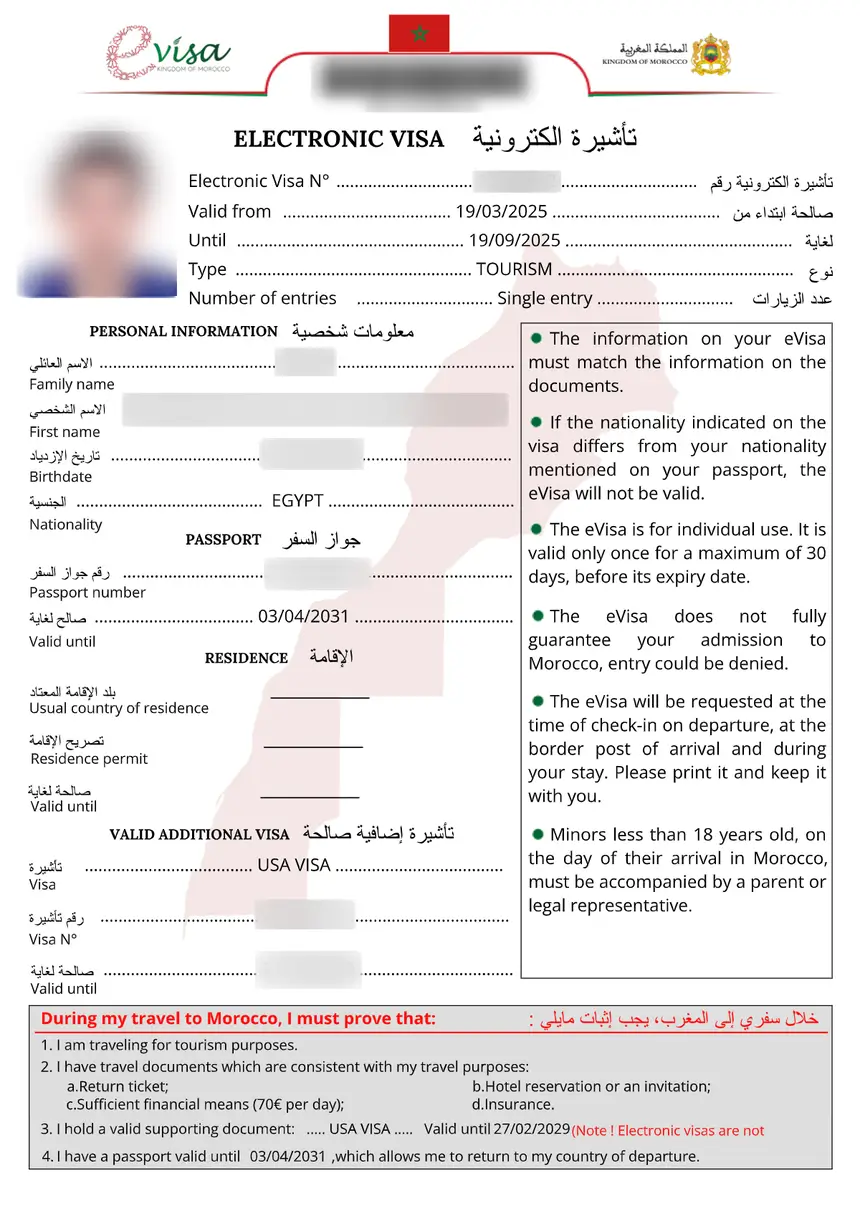
Errors in your personal details – misspelled names, wrong passport numbers, or incorrect dates of birth – are the single most common cause of rejection. The eVisa system cross-checks your data against your passport, and any mismatch triggers an automatic denial.
How to avoid: Double-check every field against your passport before submitting. Copy names exactly as they appear, including middle names and hyphenated surnames. If you need to understand the full application process, see our Morocco visa application form guide.
2. Invalid or Expired Passport
Your passport must be valid for at least 6 months beyond your intended entry date and contain at least one blank page for stamps. Passports with water damage, torn pages, or peeling laminate are also rejected at the border – even if the visa was approved.
How to avoid: Check your passport expiry date before applying. If it expires within 6 months of your travel date, renew it first. Ensure the physical condition of your passport is pristine.
3. Missing or Blurry Supporting Documents
Illegible scans, low-resolution photos, or missing required documents lead to immediate denial. The eVisa portal requires clear PDF or JPEG uploads within specific file size limits.
How to avoid: Use a high-resolution scanner (not a phone camera) for passport copies. Ensure your passport photo meets biometric standards. Review all uploads before final submission to confirm they are legible.
4. Failure to Meet Eligibility Requirements
The Morocco eVisa is only available to specific nationalities who hold a valid qualifying document – such as a multiple-entry Schengen, US, UK, Canadian, Japanese, or Australian visa (valid for at least 90 days), or a residence permit from one of those countries (valid for at least 180 days). Applying without meeting these criteria results in automatic rejection.
How to avoid: Verify your eligibility on the official Acces Maroc portal before applying. Check our Morocco visa requirements for nationality-specific details.
5. Insufficient Financial Proof
Moroccan authorities require evidence that you can fund your stay. If your bank statements show low balances, inconsistent income, or no clear source of funds, your application may be denied.
How to avoid: Submit recent bank statements (last 3 months) showing sufficient funds. There is no officially published minimum balance, but a general guideline is at least $50-100 per day of your planned stay. Include an employment letter if applicable.
6. Travel Details Do Not Match Documentation
Inconsistencies between your stated travel dates, hotel bookings, and flight reservations raise red flags. If your application says you arrive on March 1 but your hotel booking starts March 15, officers may question your true intentions.
How to avoid: Synchronize all dates across your application, flight bookings, and hotel reservations. If your plans change after submitting, be prepared to provide updated documentation if requested.
7. Previous Visa Violations or Overstay History
If you have overstayed in Morocco or any other country, or have a history of visa refusals, your application will face heightened scrutiny. Prior violations significantly reduce approval chances.
How to avoid: Resolve any outstanding immigration issues before applying. If you have a previous refusal, include a cover letter explaining the circumstances and what has changed since.
8. False or Misleading Information
Providing fraudulent documents or dishonest information – whether intentional or accidental – can result in a permanent ban from Morocco. This includes fake invitation letters, doctored bank statements, or misrepresented travel purposes.
How to avoid: Be completely transparent. If something in your background might raise concerns, address it honestly rather than trying to conceal it.
9. Suspected Immigration Risk
Officers may deny applications when they believe the applicant intends to overstay or use Morocco as a transit point to enter Europe illegally. This is particularly relevant for applicants from countries with high overstay rates who lack strong ties to their home country.
How to avoid: Demonstrate strong ties to your home country through employment letters, property ownership documents, family obligations, or return flight bookings. A clear, detailed itinerary also helps establish genuine tourist intent.
10. Late Application or Processing Delays
Applying too close to your travel date can result in denial simply because processing cannot be completed in time. Standard eVisa processing takes 3-6 business days, but peak travel seasons may cause longer delays.
How to avoid: Apply at least 2-3 weeks before your planned departure. This buffer allows time for any additional document requests and avoids last-minute stress. Track your application status through our Morocco eVisa status check guide.
How to Know If Your Morocco Visa Was Rejected
You can check your application status through these channels:
- Email notification: Check your inbox (and spam folder) for an official decision from the eVisa portal
- Online tracking: Visit the official portal and enter your application ID and passport number
- Consulate contact: If your application exceeds the standard processing window, contact the Moroccan consulate directly
A rejection notice typically does not include detailed reasons. You may receive a generic denial without specific explanations, which makes it harder – but not impossible – to address the issue.
What to Do After a Morocco Visa Rejection
Should You Appeal or Reapply?
Reapplying is usually the faster and more practical option. You can submit a new application immediately after addressing the issues that caused the denial.
Appealing is reserved for cases where you believe the authorities made a factual error. To appeal, you must contact a Moroccan consulate or embassy directly. The appeal process is typically longer and less predictable than reapplying.
Steps to Reapply Successfully
- Analyze the rejection: Review your original application for any errors, missing documents, or inconsistencies
- Fix the specific problem: Replace unclear scans, correct typos, add missing financial proof
- Strengthen your documentation: Provide more substantial bank statements, clearer hotel bookings, and a detailed day-by-day itinerary
- Translate documents: Ensure all non-English and non-French documents are professionally translated
- Verify passport validity: Confirm it remains valid for at least 6 months beyond your new entry date
- Include a cover letter: Explain what corrections you made and why you are reapplying
Morocco Visa Rejection Rates
Morocco’s visa policies have evolved significantly. For context:
| Metric | Data |
|---|---|
| Morocco Schengen visa rejection rate | 27.6% (Moroccans applying for Schengen) |
| Global Schengen visa rejection average | 13.5% |
| Morocco eVisa processing time | 3-6 business days |
| eVisa validity period | 180 days from issuance |
| Maximum stay per visit | 30 days |
Note: These statistics reflect Moroccans applying for Schengen visas to Europe, not foreign nationals applying for Morocco entry visas. Morocco’s own rejection rate for incoming eVisa applications is not publicly published but is believed to be lower for well-prepared applications from eligible nationalities.
How to Avoid Morocco Visa Rejection: Quick Checklist
Before submitting your application, verify:
- Passport valid for 6+ months beyond travel date
- All personal details match passport exactly
- High-resolution, legible document scans
- Recent bank statements showing sufficient funds
- Confirmed hotel booking covering your full stay
- Return flight reservation within visa validity
- Qualifying visa or residence permit (for eVisa applicants)
- Application submitted 2-3 weeks before departure
- All non-English/French documents translated
For a complete overview of what you need, see our Morocco visa requirements guide.
FAQs About Morocco Visa Rejection
Does Morocco reject visa applications?
Yes, Morocco rejects visa applications that do not meet the requirements. Common reasons include incomplete forms, invalid passports, insufficient financial proof, and failure to meet eligibility criteria. Well-prepared applications from eligible nationalities have a high approval rate.
What is the most common reason for Morocco visa rejection?
The most common reason is incorrect or incomplete application data. Typos in names, passport numbers, or dates that do not match official documents trigger automatic denials. Always copy information exactly as it appears on your passport.
How much bank balance is required for a Morocco visa?
Morocco does not publish an official minimum bank balance requirement. However, applicants should demonstrate sufficient funds to cover their stay – a general guideline is $50-100 per day. Submit recent bank statements (last 3 months) showing consistent income and adequate savings.
Can I reapply after a Morocco visa rejection?
Yes, you can reapply immediately after a rejection. There is no mandatory waiting period. However, you should address the specific issues that caused the denial before submitting a new application. Repeatedly applying with the same errors will result in repeated rejections.
Is there an appeal process for Morocco visa rejection?
Yes, you can appeal by contacting a Moroccan consulate or embassy directly. However, appeals are generally reserved for cases where a factual error was made. Reapplying with corrected documentation is usually faster and more effective than filing an appeal.
Does a Morocco visa rejection affect future applications?
A single rejection does not permanently bar you from applying again. However, multiple rejections or a history of visa violations will trigger increased scrutiny on future applications. Each application is evaluated on its own merits.
Can I get a Morocco visa with a criminal record?
Morocco conducts background checks as part of the visa process. A criminal record does not automatically disqualify you, but serious offenses – particularly those related to drug trafficking or terrorism – are likely grounds for denial. Minor offenses may not affect the outcome.
Do US or UK citizens need a visa for Morocco?
No. Citizens of the US, UK, EU, Canada, Australia, and many other countries can enter Morocco visa-free for up to 90 days. You only need a valid passport. The eVisa system is designed for nationalities that do require a visa – see our Morocco visa-free countries list for details.
How long does it take to process a Morocco eVisa?
Standard processing takes 3-6 business days. During peak travel seasons, it may take longer. Apply at least 2-3 weeks before your travel date to allow for any delays or additional document requests. Check our Morocco visa processing time guide for more details.
What happens if I overstay my Morocco visa?
Overstaying your visa in Morocco can result in fines, detention, a deportation order, and a ban on future entry. If you need to extend your stay, request an extension at the nearest police station (commissariat) before your authorized stay expires. Extensions are not guaranteed.