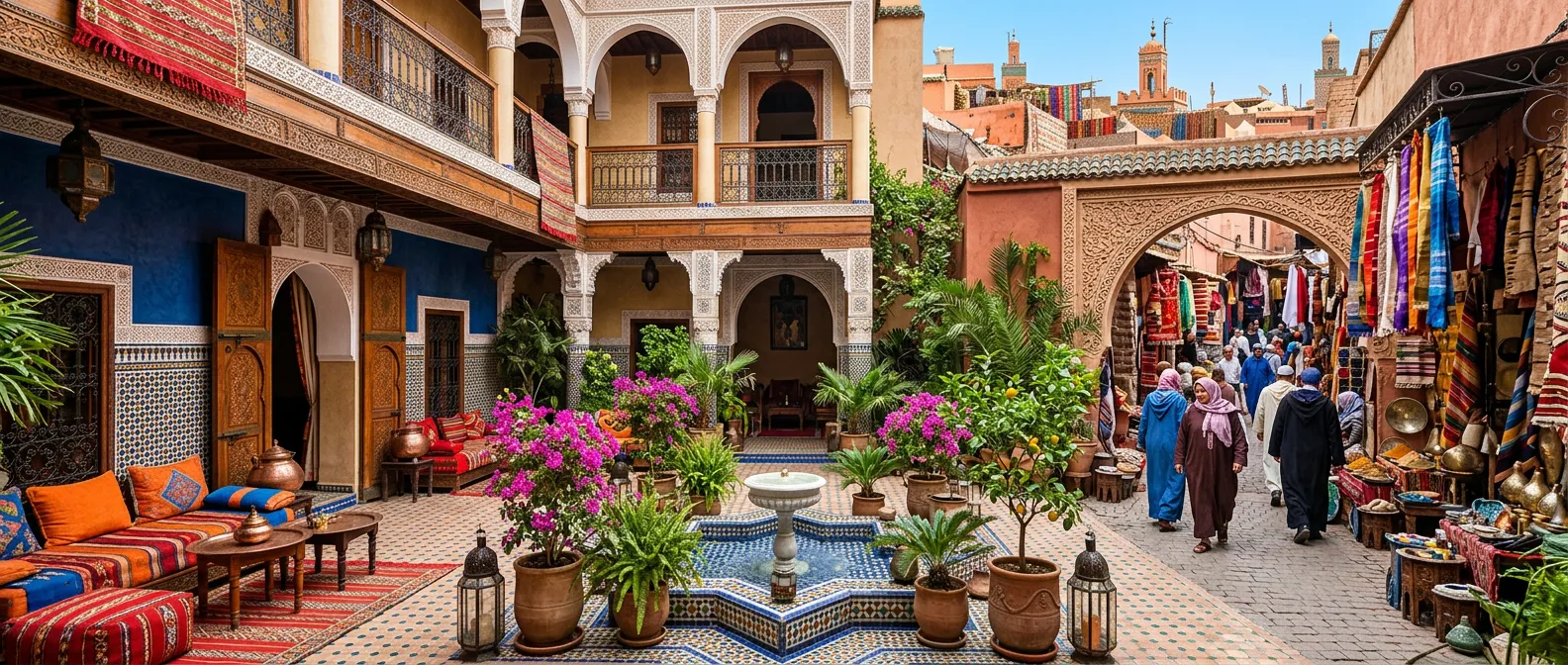
Morocco is a vibrant North African country where ancient medinas meet the Sahara Desert, offering travelers a sensory overload of colors, flavors, and history. From the bustling souks of Marrakech to the blue-washed streets of Chefchaouen, Morocco delivers experiences that range from adventurous to deeply cultural. This guide covers everything you need to plan your trip, from top destinations and best travel seasons to practical tips on money, safety, and etiquette.
Top Destinations in Morocco
Morocco packs an extraordinary range of landscapes and experiences into a country roughly the size of California. Whether you crave imperial cities, mountain hikes, or desert sunsets, there is a destination for every type of traveler.
Marrakech
The “Red City” is Morocco’s most visited destination and for good reason. The Jemaa el-Fnaa square transforms nightly into a carnival of food stalls, musicians, and storytellers. Lose yourself in the labyrinthine souks, visit the Bahia Palace and Saadian Tombs, then escape the medina’s intensity in the Jardin Majorelle. Marrakech also serves as the launch point for day trips to the Atlas Mountains and the Ouzoud Waterfalls.
Fez
Home to the world’s oldest continuously operating university, Al-Qarawiyyin (founded in 859 CE), Fez has the largest car-free urban zone on Earth. Its medieval medina, Fes el-Bali, is a UNESCO World Heritage Site with over 9,000 narrow alleys. The iconic Chouara Tannery, where leather is still dyed by hand in honeycomb-shaped vats, is a must-see. Fez is less touristy than Marrakech and offers a more authentic glimpse into traditional Moroccan life.
Chefchaouen
Nestled in the Rif Mountains, this small city is famous for its striking blue-washed buildings. The exact origin of the blue paint is debated — some say it was introduced by Jewish refugees in the 1930s, while others claim it keeps mosquitoes away. Regardless, the effect is mesmerizing. Chefchaouen is relaxed, walkable, and perfect for photography enthusiasts. It is also a gateway to hiking in the Rif Mountains.
Sahara Desert (Merzouga and M’Hamid)
No Morocco trip is complete without a night under the Saharan stars. Merzouga, near the Algerian border, is the gateway to Erg Chebbi — towering sand dunes that reach up to 150 meters. Camel treks, 4×4 excursions, and overnight bivouac camps are widely available. M’Hamid, further south, offers a more off-the-beaten-path desert experience with fewer crowds.
Essaouira
This windswept Atlantic port city is Morocco’s answer to a laid-back beach town. Its fortified medina is a UNESCO site, and the constant breeze makes it a world-class destination for windsurfing and kitesurfing. Essaouira’s seafood scene is legendary — head to the port for the freshest grilled fish you will ever eat.
Other Notable Destinations
- Rabat — The capital city offers a relaxed atmosphere, the Hassan Tower, and the Kasbah of the Udayas.
- Tangier — The gateway between Europe and Africa, reachable by ferry from Spain. Once a haven for artists and writers like Burroughs and Matisse.
- Ouarzazate — The “Hollywood of Morocco,” home to Atlas Film Studios and the gateway to the Draa Valley’s kasbahs.
- Ait Benhaddou — A UNESCO-listed fortified village that has starred in films like Gladiator and Game of Thrones.
Best Time to Visit Morocco
Morocco’s climate varies dramatically by region and season. The coast enjoys mild temperatures year-round, while inland cities like Marrakech and Fez can be scorching in summer. The desert is best visited in spring or autumn.
| Season | Months | Weather | Best For |
|---|---|---|---|
| Spring | March-May | Mild, 15-25C (59-77F) | Imperial cities, Atlas hiking, desert trips |
| Summer | June-August | Hot inland (35-45C/95-113F), cool coast | Beach towns (Essaouira, Agadir), northern mountains |
| Autumn | September-November | Warm, 18-28C (64-82F) | Desert trips, Marrakech, cultural festivals |
| Winter | December-February | Cool (5-18C/41-64F), snow in Atlas | Skiing in Oukaimeden, fewer crowds, lower prices |
The sweet spot for most travelers is March to May or September to November. These shoulder seasons offer comfortable temperatures across all regions and avoid the peak summer crowds.
During Ramadan (which shifts roughly 11 days earlier each year), many restaurants close during the day and some services slow down. Traveling during Ramadan is entirely possible and can be a rewarding cultural experience, but be prepared for limited daytime dining options outside tourist areas.
Getting to Morocco
Visa Requirements
Morocco is remarkably accessible. Citizens of over 60 countries, including the United States, United Kingdom, Canada, Australia, and all EU nations, can enter visa-free for up to 90 days. You only need a valid passport with at least 6 months of remaining validity.
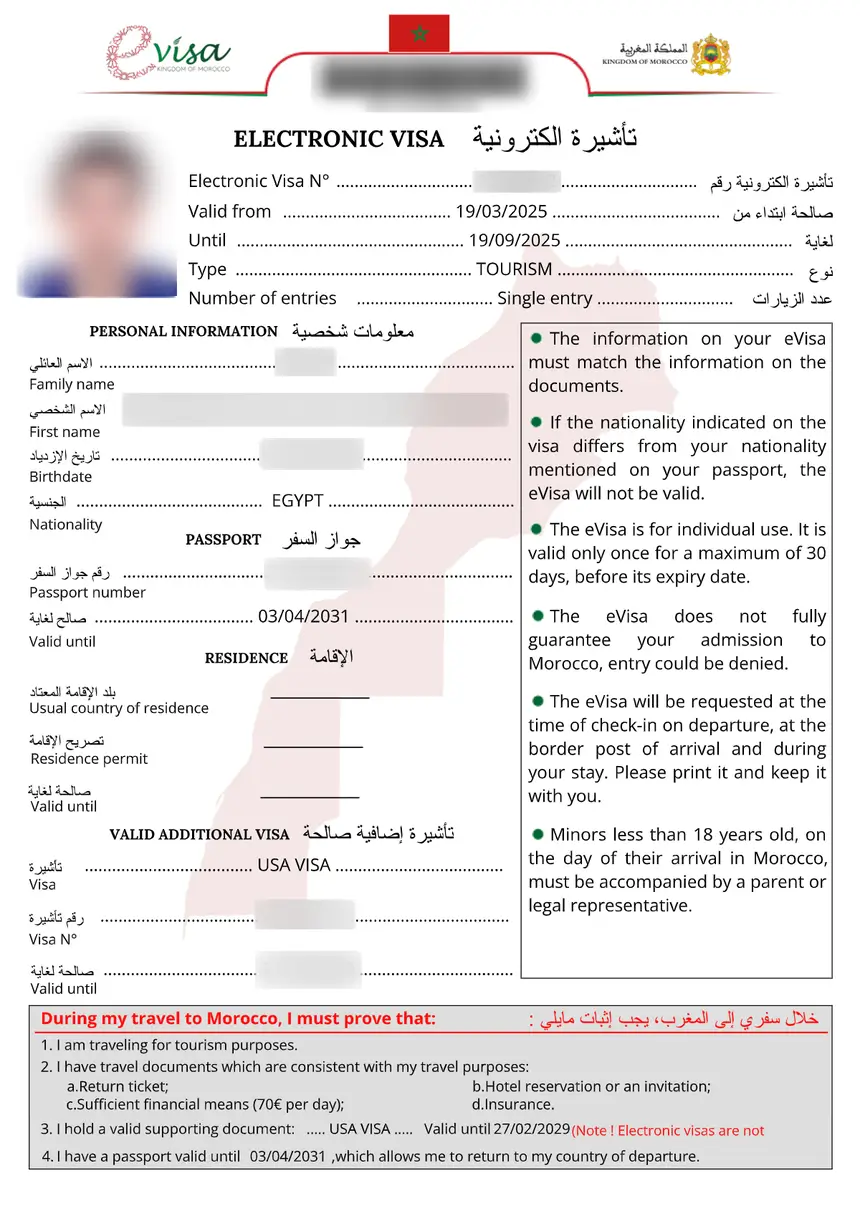
If you are from a country that requires a visa, Morocco offers an electronic visa (eVisa) system. The eVisa costs approximately $30-90 and can be applied for online at the official acces-maroc.ma portal. For full details, see our Morocco eVisa Complete Guide and check the complete visa requirements for your nationality.
Nationals from certain countries may also qualify for an eVisa if they hold a valid Schengen, US, UK, Canadian, Australian, or Japanese visa. See our visa-free countries list for the full breakdown.
Airports and Flights
Morocco has 8 international airports, with the busiest being:
- Casablanca Mohammed V (CMN) — The main hub, with direct flights from most major cities worldwide.
- Marrakech Menara (RAK) — Popular with European carriers and budget airlines.
- Fez (FEZ), Agadir (AGA), Tangier (TNG) — Good regional options.
Budget airlines like Ryanair, EasyJet, and Transavia offer cheap flights from European cities. From the US, Royal Air Maroc flies direct from New York, Washington, and Miami.
Ferries
If you are coming from Spain, ferries run frequently between Algeciras or Tarifa and Tangier (or Tangier Med). The crossing takes 1-2 hours and tickets start around 30 EUR.
Getting Around Morocco
Morocco has a solid transportation network that makes independent travel straightforward.
- Trains (ONCF) — The train network connects Casablanca, Rabat, Fez, Meknes, Tangier, and Marrakech. The high-speed Al Boraq train links Tangier to Casablanca in just 2 hours. Trains are comfortable, affordable, and punctual.
- Buses (CTM, Supratours) — CTM is the national bus company with routes to nearly every city. Supratours (run by the train company) covers destinations the rail network misses. Both are reliable and cheap.
- Grand Taxis — Shared taxis that run fixed routes between cities. They leave when full (usually 6 passengers). An affordable way to reach smaller towns.
- Petit Taxis — City taxis, always metered (insist on it). They are color-coded by city: red in Marrakech, beige in Casablanca, blue in Fez.
- Car Rental — Useful for exploring the Atlas Mountains or the south at your own pace. Roads are generally good, but driving in cities can be chaotic. An International Driving Permit is recommended.
Food and Drink
Moroccan cuisine is one of the world’s great culinary traditions. Expect bold spices, slow-cooked meats, and generous portions.
Must-try dishes:
- Tagine — A slow-cooked stew named after the conical clay pot it is cooked in. Variants include chicken with preserved lemons and olives, lamb with prunes and almonds, and kefta (meatball) tagine.
- Couscous — The national dish, traditionally served on Fridays. Steamed semolina topped with vegetables and meat.
- Pastilla (B’stilla) — A sweet-savory pie of shredded pigeon or chicken, almonds, and cinnamon wrapped in crispy filo pastry.
- Harira — A hearty tomato and lentil soup, traditionally eaten to break the fast during Ramadan.
- Mint Tea — Called “Moroccan whiskey” by locals, this sweet, gunpowder green tea with fresh mint is served everywhere as a sign of hospitality.
Street food is abundant and generally safe. Look for busy stalls with high turnover. A full meal at a local restaurant costs 30-60 MAD ($3-6), while a mid-range restaurant meal runs 80-150 MAD ($8-15).
Culture and Etiquette
Understanding a few cultural norms will make your trip smoother and more rewarding.
Haggling: Bargaining is expected in souks and with street vendors. Start at about 40-50% of the asking price and negotiate from there. In fixed-price shops and supermarkets, prices are non-negotiable.
Dress Code: Morocco is a Muslim country, and while it is relatively liberal, modest dress is appreciated, especially outside tourist areas. Cover shoulders and knees when visiting medinas and rural areas. Women do not need to cover their hair except when entering mosques.
Mosques: Non-Muslims cannot enter mosques in Morocco with one exception — the Hassan II Mosque in Casablanca, which offers guided tours. Respect prayer times and avoid photographing people at prayer.
Photography: Always ask permission before photographing locals, especially in rural areas. Some people, particularly snake charmers and performers in Jemaa el-Fnaa, will expect a tip for photos.
Ramadan: If visiting during Ramadan, avoid eating, drinking, or smoking in public during daylight hours out of respect. Many restaurants still serve tourists during the day, but the atmosphere changes significantly.
Greeting: A handshake is the standard greeting. Close acquaintances may greet with cheek kisses (three alternating sides). Use your right hand for greetings, eating, and giving or receiving items.
Safety Tips
Morocco is generally a safe destination for travelers, but like any popular tourist destination, some awareness goes a long way.
Common scams to watch for:
- “Friendly” guides who offer unsolicited tours through the medina and then demand payment. Politely decline or agree on a price upfront.
- Taxi drivers who claim the meter is broken. Insist on the meter or negotiate the fare before departing.
- Overpriced goods in souks. Research typical prices before shopping and be prepared to walk away.
- Fake tour operators. Book through your accommodation or a reputable agency.
Women travelers: Morocco is generally safe for women, but unwanted attention (catcalling, staring) is common, especially in cities. Dressing modestly reduces but does not eliminate this. Traveling with a companion or in a group is advisable in less touristy areas. Solo female travelers should avoid walking alone in poorly lit areas at night.
Solo travel: Morocco is manageable for solo travelers. Stick to well-traveled routes, stay in well-reviewed riads or hostels, and trust your instincts. Joining a group tour for the desert or mountain excursions is a good option.
Health: Tap water in major cities is generally safe but may cause mild stomach upset for first-time visitors. Stick to bottled water. Ensure your routine vaccinations are up to date. No special vaccinations are required unless arriving from a yellow fever or polio-endemic country.
Budget and Money
Morocco is an affordable destination that caters to all budgets.
| Category | Budget | Mid-Range | Luxury |
|---|---|---|---|
| Accommodation | $10-20/night (hostel) | $40-80/night (riad) | $150-400/night (boutique riad/hotel) |
| Meals | $3-8/meal | $10-20/meal | $30-60/meal |
| Transport | $5-15/day (bus) | $15-30/day (train) | $50-80/day (car rental) |
| Activities | $5-15 | $20-50 | $80-200 (private desert tour) |
| Daily Total | $25-50 | $80-150 | $200+ |
Currency: The Moroccan Dirham (MAD) is a closed currency — you cannot buy or sell it outside Morocco. Exchange money at banks, official bureaus, or ATMs upon arrival. Avoid airport exchange counters (poor rates). ATMs are widely available in cities and towns.
Tipping: Tipping (called “pourboire”) is customary. Round up taxi fares, leave 10-15% at restaurants, and tip guides 50-100 MAD per day. A few dirhams for bathroom attendants, parking attendants, and anyone who assists you is appreciated.
Cash limits: You can bring up to 2,000 MAD (~$200) in local currency into Morocco. Foreign currency above the equivalent of 100,000 MAD (~$10,000 USD) must be declared at customs.
Where to Stay
Morocco offers a range of accommodation options, but the standout experience is staying in a riad — a traditional Moroccan house built around a central courtyard, often with a fountain, garden, and rooftop terrace. Many historic riads in the medinas have been converted into boutique guesthouses.
- Riads — The quintessential Morocco experience. Prices range from $30 for a basic room to $300+ for a luxury suite. Book directly for better rates.
- Hostels — Widely available in tourist cities. Dorm beds start at $8-12. Many hostels organize group activities and tours.
- Hotels — International chains are present in Casablanca and Marrakech. Budget hotels outside medinas cost $20-40/night.
- Desert Camps — Bivouac camps in the Sahara range from basic shared tents ($30-50) to luxury glamping with private bathrooms and king beds ($150-400).
For the best experience, mix riads in the cities with a night in a desert camp.
Planning Your Morocco Trip: Quick Checklist
Before you go, make sure you have:
- Valid passport with at least 6 months remaining validity
- Visa or eVisa if required (check visa requirements)
- Travel insurance covering medical evacuation
- Comfortable walking shoes for medinas and uneven terrain
- Modest clothing for rural areas and medinas
- A scarf or shawl (useful for sun protection, mosque visits, and dust)
- Cash in EUR or USD to exchange upon arrival
- Offline maps downloaded (Google Maps works offline in Morocco)
For visa fees and processing times, visit our Morocco visa fees page or learn how to apply if you need an eVisa.
FAQs About Morocco Travel
Is Morocco friendly to American tourists?
Yes, Morocco is very welcoming to American tourists. English is widely spoken in tourist areas, and Moroccans are known for their hospitality. The US and Morocco have had strong diplomatic relations since 1777 — Morocco was the first country to recognize American independence.
What is the best month to visit Morocco?
April and October are widely considered the best months. Temperatures are comfortable across all regions (15-25C/59-77F), making them ideal for exploring cities, hiking, and desert trips. Avoid July and August if you plan to visit Marrakech or Fez, where temperatures regularly exceed 40C (104F).
What should I avoid as a tourist in Morocco?
Avoid drinking tap water (stick to bottled), don’t photograph people without permission, don’t enter medinas without a map or GPS, avoid following unsolicited “guides,” and don’t wear revealing clothing in non-tourist areas. Also, never take photos near military or government buildings.
How many days do I need in Morocco?
A minimum of 7-10 days is recommended to cover the highlights: 2 days in Marrakech, 2 in Fez, 1 in Chefchaouen, 2 for a Sahara desert trip, and 1-2 days for Essaouira or the coast. A two-week itinerary allows for a more relaxed pace and off-the-beaten-path destinations.
Do I need a visa to visit Morocco?
Citizens of over 60 countries, including the US, UK, Canada, Australia, and EU nations, do not need a visa for stays up to 90 days. If your nationality requires a visa, Morocco offers an eVisa system. Check our complete guide for details.
Is Morocco safe for solo female travelers?
Morocco is generally safe for solo female travelers, though unwanted attention like catcalling can occur. Dressing modestly, staying in well-reviewed riads, and avoiding walking alone at night in poorly lit areas helps. Many women travel Morocco solo without issues, especially on well-traveled routes.
What is the currency in Morocco and can I use credit cards?
The currency is the Moroccan Dirham (MAD). Credit cards are accepted at upscale hotels, restaurants, and shops in major cities, but Morocco is largely a cash economy. Carry cash for souks, taxis, small restaurants, and rural areas. ATMs are widely available.
Should I tip in Morocco?
Tipping is customary and appreciated. Leave 10-15% at restaurants, round up taxi fares, and tip tour guides 50-100 MAD ($5-10) per day. Small tips (2-5 MAD) for bathroom attendants and people who assist you are standard.
Can I drink alcohol in Morocco?
Yes, alcohol is available in licensed bars, hotels, and restaurants in tourist areas and major cities. Some restaurants do not serve alcohol, especially in conservative areas. During Ramadan, alcohol sales are restricted, and Moroccans are prohibited from purchasing it, but tourists can still buy alcohol by showing their passport.
What is the best way to get from the airport to the city center?
Casablanca airport has a train station (the Airport Express to Casa Voyageurs, ~45 min, 50 MAD). Marrakech airport is 6 km from the medina — a taxi costs around 100-150 MAD (negotiate before departure). Most other airports have bus or taxi connections to city centers. Pre-arrange a pickup through your riad for a stress-free arrival.