Morocco’s entry requirements are straightforward for most Western travelers: you need a valid passport and, depending on your nationality, either no visa at all or an approved e-Visa. US, UK, EU, Canadian, and Australian citizens can enter visa-free for up to 90 days. Other nationalities may need to apply for a visa through the e-Visa system or at a Moroccan consulate. This guide covers every document, rule, and practical detail you need before landing in Morocco.
Passport Requirements for Morocco
Your passport is the single most important document for entering Morocco. The authorities enforce strict rules on validity and condition.
Passport Validity
Different sources cite different validity periods:
| Source | Minimum Validity Required |
|---|---|
| GOV.UK (UK government) | 3 months beyond arrival date |
| US State Department | 6 months beyond arrival date |
| Moroccan consulate (general advice) | 6 months beyond arrival date |
The safe rule: ensure your passport is valid for at least 6 months past your planned arrival date. While Morocco officially requires 3 months (per UK government advice), many airlines will deny boarding if your passport expires within 6 months.
Damaged Passports
Moroccan border officials have denied entry to travelers with damaged passports. This includes:
- Water damage or staining
- Torn or missing pages
- Peeling laminate on the photo page
- Unauthorized markings or stamps
If your passport shows any of these signs, renew it before traveling. The cost of a new passport is far less than being turned away at the border.
Entry Stamp Requirement
Make sure the border official stamps your passport when you arrive. Some travelers have reported difficulties leaving Morocco because their passport had no entry stamp. This is a common issue at busy airports like Casablanca (CMN) and Marrakech (RAK). If you notice the agent did not stamp your passport, ask them to do so before leaving the immigration desk.
Visa Requirements by Nationality
Morocco has a generous visa-free policy covering over 60 countries. Whether you need a visa depends entirely on your passport nationality.
Visa-Free Entry (No Visa Needed)
Citizens of the following countries can enter Morocco without a visa for tourism stays:
| Stay Duration | Countries |
|---|---|
| 90 days | United States, United Kingdom, Canada, Australia, New Zealand, Japan, all EU/EFTA member states, Brazil, Russia, Turkey, Argentina, Mexico, South Korea, Singapore, and many more |
| 60 days | Dominican Republic |
| 30 days | Hong Kong, Maldives, Kazakhstan |
For a complete list organized by region, see our Morocco visa-free countries guide.
Countries That Need a Visa
If your nationality is not on the visa-free list, you will need to obtain a visa before arriving in Morocco. Your main options are:
-
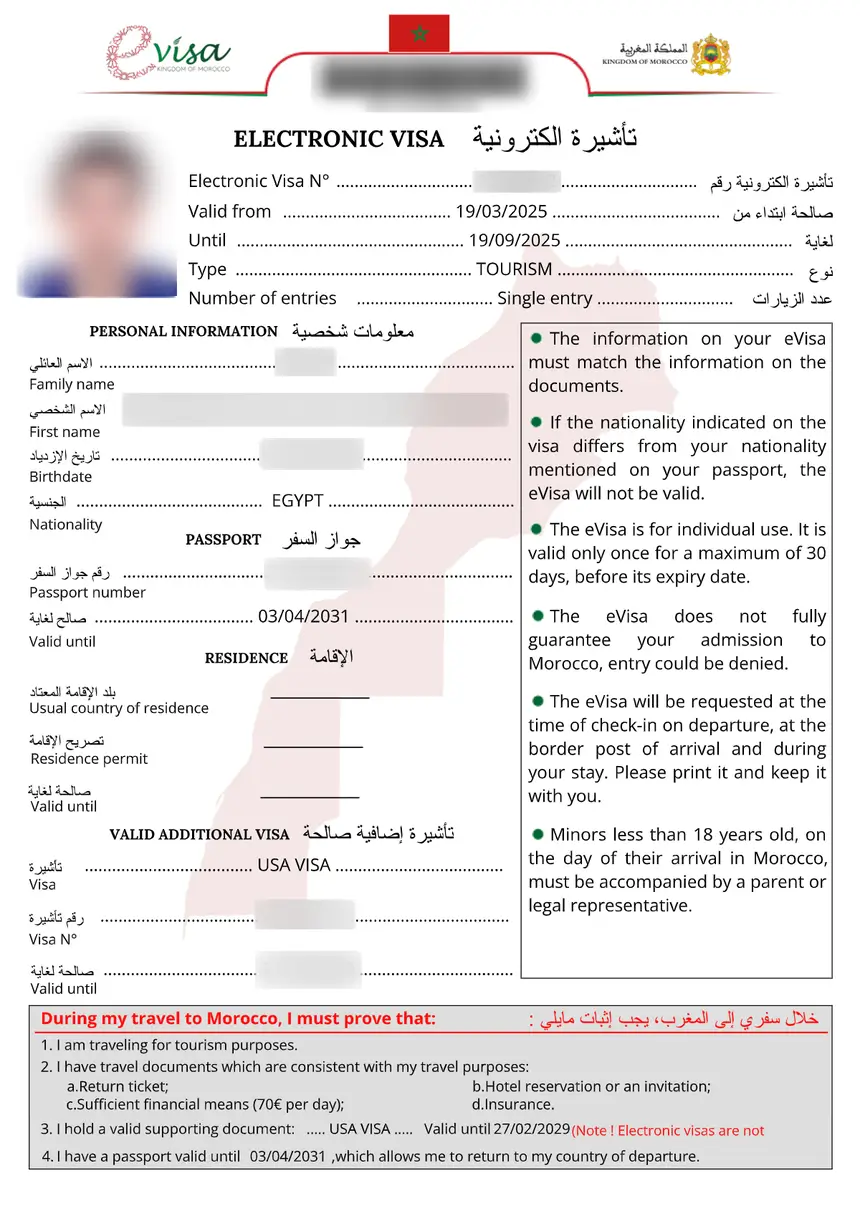
Morocco e-Visa – Available online for eligible nationalities at acces-maroc.ma. Launched July 10, 2022, the e-Visa allows single-entry stays of up to 30 days. The standard processing fee is approximately $30 USD. Read our full Morocco e-Visa guide for step-by-step instructions.
-
Embassy/Consulate visa – Apply at your nearest Moroccan embassy or consulate. Required for nationalities not eligible for the e-Visa.
-
Conditional e-Visa – If you hold a valid Schengen visa, US visa, UK visa, Canadian visa, or Australian visa (with at least 90 days remaining validity), you may qualify for Morocco’s e-Visa regardless of your passport nationality. Check e-Visa eligibility for details.
For nationalities that commonly need visas – including Pakistani, Indian, and Nigerian citizens – we have dedicated guides with specific requirements and tips.
Electronic Travel Authorization (AEVM)
Morocco is rolling out a new Electronic Travel Authorization system called AEVM (Autorisation Electronique de Voyage pour le Maroc). As of 2026, it currently applies to citizens of:
- Republic of Congo
- Ecuador
- Guinea
- Ghana
Important: Morocco plans to expand AEVM to all visa-exempt countries in the future. If you are from the US, UK, EU, or other visa-free countries, you do not currently need an AEVM – but this may change. Monitor official sources before your trip.
Health and Vaccine Requirements
Morocco does not require routine vaccinations for most travelers. However, there are a few health-related entry requirements to know:
- Polio certificate: Required if you are arriving from a polio-affected country. Check the current WHO polio status of your departure country before traveling.
- Health declaration: All passengers must complete a health declaration form within 72 hours before their flight to Morocco. This was introduced during COVID-19 and remains in effect.
- Recommended vaccinations: While not mandatory for entry, the CDC recommends being up-to-date on Hepatitis A, Hepatitis B, Typhoid, and routine vaccines before traveling to Morocco.
Morocco has good medical facilities in major cities (Casablanca, Rabat, Marrakech), but travel insurance with medical coverage is strongly recommended. Rural areas may have limited healthcare access.
Customs Rules and Cash Limits
Morocco has strict rules about what you can bring into and out of the country. Knowing these limits prevents problems at the border.
Moroccan Dirham Restrictions
The Moroccan dirham (MAD) is a non-convertible currency. This means:
- You cannot exchange dirhams outside of Morocco
- You can bring in or take out a maximum of 2,000 MAD (approximately $200 USD)
- Exchange any remaining dirhams before leaving Morocco (airports have exchange offices)
Foreign Currency Declaration
You must declare foreign currency if the total value exceeds 100,000 MAD (approximately $10,000 USD). There is no limit on how much foreign cash you can carry, but amounts above this threshold must be declared at customs.
Prohibited and Restricted Items
Morocco prohibits or restricts the import of:
- Narcotics and drugs (severe penalties apply)
- Firearms and ammunition (permit required)
- Pornographic material
- Religious materials intended for proselytizing
- Certain agricultural products
For a complete list, consult the Moroccan customs authority (website in French).
Dual Nationality Considerations
If you hold dual nationality including Moroccan citizenship, be aware that Moroccan citizenship takes precedence in the eyes of Moroccan authorities. This means:
- You must enter and exit Morocco using your Moroccan passport
- Moroccan law applies to you regardless of your other citizenship
- Consular access from your other country of citizenship may be limited
- Military service obligations may apply
If you are a dual US-Moroccan or UK-Moroccan citizen, contact the Moroccan consulate before traveling to understand your obligations.
Ports of Entry
Morocco has multiple official ports of entry for international travelers:
Airports
| Airport | Code | City |
|---|---|---|
| Mohammed V International | CMN | Casablanca |
| Rabat-Salé Airport | RBA | Rabat |
| Marrakech Menara | RAK | Marrakech |
| Agadir-Al Massira | AGA | Agadir |
| Nador El Aroui | NDR | Nador |
| Tangier Ibn Battouta | TNG | Tangier |
| Fes-Saïss | FEZ | Fes |
| Ouarzazate | OZZ | Ouarzazate |
Seaports
Major seaports include Tangier Med, Casablanca, and Agadir. If arriving by private boat, you must enter at a recognized port of entry (official Moroccan port authority). Entering Morocco through any other coastal point is illegal.
Land Borders
Morocco has one operational land border with Algeria at Oujda. However, the Morocco-Algeria border has been closed intermittently due to political tensions. Check current status before planning overland travel.
Staying Beyond 90 Days
If you entered Morocco visa-free and want to stay beyond 90 days:
- Visit a local police station (commissariat) before your 90-day period expires
- Request an extension – this is not guaranteed and is assessed case-by-case
- Do not overstay – penalties include fines, detention, deportation orders, and re-entry bans
For stays longer than 90 days for work or study purposes, you must apply for the appropriate Morocco visa type through a Moroccan consulate before traveling.
Arrival Process: What to Expect
When your plane lands in Morocco, here is what to expect at immigration:
- Fill out the landing card – distributed on the plane or available at the immigration hall. Have your hotel address ready.
- Queue at passport control – present your passport and landing card. Lines can be long at Casablanca (CMN) during peak hours.
- Get your passport stamped – verify the stamp is in your passport before leaving the desk.
- Collect luggage – proceed to baggage claim.
- Pass through customs – green channel (nothing to declare) or red channel (goods to declare).
Tip: Keep a printed copy of your hotel reservation and return flight ticket. Immigration officers sometimes ask to see proof of accommodation and onward travel.
Morocco Entry Requirements Checklist
Before flying to Morocco, confirm you have:
- Valid passport (6+ months validity recommended)
- Visa or e-Visa (if required for your nationality)
- Return or onward flight ticket
- Hotel booking confirmation
- Completed health declaration (within 72 hours of flight)
- Travel insurance (recommended)
- Sufficient funds for your stay
- Cash within dirham limits (max 2,000 MAD if bringing local currency)
For visa-specific requirements, see our complete Morocco visa requirements guide. If you need to apply for an e-Visa, follow our step-by-step application guide.
FAQs About Morocco Entry Requirements
Do US citizens need a visa for Morocco?
No. US citizens can enter Morocco visa-free for up to 90 days for tourism. You only need a valid US passport. The visa-free arrangement has been in place since 1956.
Do UK citizens need a visa for Morocco?
No. UK citizens can visit Morocco without a visa for up to 90 days. Your passport must be valid for at least 3 months beyond your arrival date (6 months recommended).
How long can I stay in Morocco without a visa?
Most visa-free nationalities can stay for up to 90 days. Exceptions include Dominican Republic (60 days), and Hong Kong, Maldives, and Kazakhstan (30 days).
What happens if I overstay my visa in Morocco?
Overstaying can result in fines, detention, a deportation order, and a ban on re-entering Morocco. Always leave before your authorized stay expires, or apply for an extension at a local police station before the deadline.
Can I enter Morocco with a damaged passport?
Moroccan authorities have denied entry to travelers with damaged passports, including water damage, torn pages, or peeling laminate. Renew your passport before traveling if it shows any damage.
Do I need a return ticket to enter Morocco?
Yes, immigration officers may ask to see proof of onward or return travel. Having a printed copy of your return flight booking is recommended.
Is Morocco safe for tourists right now?
Morocco is generally considered safe for tourists. Exercise normal precautions, be aware of petty crime in crowded areas, and follow local laws and customs. Check your government’s travel advisory for the latest safety information.
Do I need vaccinations to enter Morocco?
No routine vaccinations are mandatory for most travelers. A polio certificate is required if arriving from a polio-affected country. The CDC recommends Hepatitis A, Hepatitis B, Typhoid, and routine vaccines.
Can I drink tap water in Morocco?
Tap water in major cities is treated and generally safe, but most travelers prefer bottled water to avoid stomach issues. Bottled water is widely available and inexpensive.
What currency should I bring to Morocco?
Bring Euros or US Dollars and exchange them in Morocco. The dirham is non-convertible and cannot be exchanged outside Morocco. ATMs are widely available in cities. You can bring in up to 2,000 MAD and must declare foreign currency over 100,000 MAD (~$10,000 USD).