
If your layover in Morocco is under 24 hours and you stay inside the international transit area of the airport, you do not need a transit visa – regardless of your nationality. However, if your connection exceeds 24 hours, you need to leave the transit area, or you want to explore Morocco during your layover, you will need either a transit visa or an entry visa. This guide covers everything you need to know about the Morocco transit visa, including requirements, fees, and how to apply.
Do You Need a Transit Visa for Morocco?
Whether you need a transit visa depends on two factors: your nationality and whether you plan to leave the airport transit area.
The fastest way to determine your situation is to check these three questions:
- Are you a citizen of a visa-exempt country (US, UK, EU, Canada, Australia, etc.)? If yes, you do not need any visa – you can enter Morocco freely for up to 90 days.
- Will you stay inside the international transit area and your connection is under 24 hours? If yes, no visa is needed for any nationality.
- Do you need to leave the airport, collect baggage, or stay longer than 24 hours? If yes, you need a transit visa or an entry visa.
If none of the above applies to you, read on for full details on transit visa requirements.
Airside Transit: No Visa Needed for Up to 24 Hours
Morocco permits visa-free airside transit for all nationalities at Mohammed V International Airport (CMN) in Casablanca, the country’s main international hub. This means you can connect through Morocco without a visa as long as you meet these conditions:
- You remain inside the international transit area of the airport
- Your onward flight departs within 24 hours
- You hold a confirmed onward ticket
- You have valid travel documentation for your final destination
During airside transit, you cannot leave the transit zone, collect checked baggage, or pass through Moroccan immigration. If your airline requires you to collect and re-check bags during a connection, you will need to pass through border control – which means you need a visa unless you are from a visa-exempt country.
Most major connecting routes through Casablanca are operated by Royal Air Maroc, which uses CMN as its hub. If your connection is on a single booking with the same airline, your bags are typically transferred automatically and you can stay airside.
Landside Transit: When You Need a Visa
Landside transit applies when you must pass through Moroccan immigration during your connection. This includes situations where:
- Your layover exceeds 24 hours
- You need to leave the transit area to collect and re-check baggage
- You are changing airports (e.g., arriving at CMN and departing from a different airport)
- You want to leave the airport to explore Morocco during a long layover
- You have an overnight connection and need to stay in a hotel
For landside transit, travelers who are not visa-exempt need either a Morocco transit visa or an appropriate entry visa. The transit visa is designed specifically for short stays of up to 72 hours.
Morocco Transit Visa Requirements
To apply for a Morocco transit visa at an embassy or consulate, you will need the following documents:
| Document | Details |
|---|---|
| Valid passport | Must have at least 2 blank visa pages and remain valid for the duration of your trip |
| Passport-sized photographs | Recent photo with white background |
| Visa for final destination | A copy of the visa for the country you are traveling to after Morocco |
| Flight tickets | Copies of your tickets showing transit through Morocco |
| Proof of residence | Identity card or residence permit confirming your address |
| Accommodation proof | Hotel booking if your layover is long enough to require overnight stay |
| Visa fee payment | Paid at the embassy or consulate (see fees below) |
Ensure all documents are accurate and consistent. Incomplete or mismatched documents are the most common reason for transit visa rejections.
How to Apply for a Morocco Transit Visa
Unlike the Morocco eVisa, which can be completed entirely online, the transit visa requires in-person processing at a Moroccan embassy or consulate. Here is the step-by-step process:
- Locate the nearest Moroccan Embassy or Consulate – Find your closest diplomatic mission on the Moroccan Ministry of Foreign Affairs website.
- Schedule an appointment – Some embassies require appointments; others accept walk-in applications. Check with your local mission.
- Submit your documents in person – Bring all required documents listed above. You will need to present your passport for verification.
- Pay the visa fee – Payment is made at the embassy. Fees vary by location (see below).
- Wait for processing – Standard processing takes 3 to 6 working days, though it may take longer during busy periods.
- Collect your passport – Return to the embassy once notified that your visa is ready.
Important: You must apply for the transit visa before you travel. Morocco does not offer transit visas on arrival at any airport or border crossing.
Morocco Transit Visa Fee and Processing Time
The consular fee for a Morocco transit visa is MAD 170 (approximately $18 USD), though the exact amount may vary depending on the embassy or consulate where you apply. Additional service fees may apply at some diplomatic missions.
| Visa Type | Fee (MAD) | Fee (approx. USD) | Processing Time |
|---|---|---|---|
| Transit visa (single entry) | MAD 170 | ~$18 | 3-6 working days |
| Tourist visa (single entry) | MAD 220 | ~$23 | 5-10 working days |
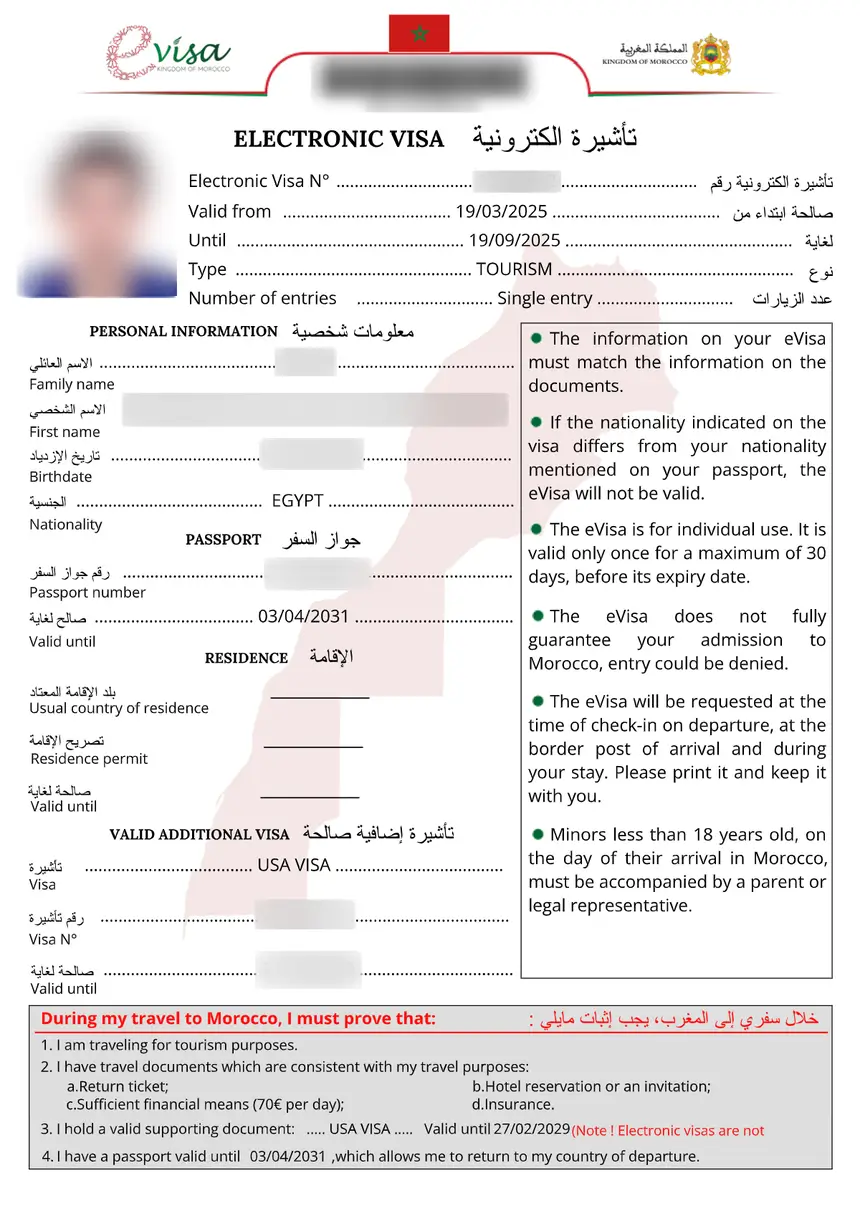
| eVisa (online) | Varies | ~$90-160 total | 1-2 working days |
For a full breakdown of all Morocco visa fees, including eVisa costs and service charges, see our dedicated fee guide.
Transit Visa vs eVisa: Which Should You Choose?
If you are from a country that qualifies for the Morocco eVisa, you have a choice between applying for a transit visa at an embassy or applying for an eVisa online. Here is how they compare:
| Feature | Transit Visa | eVisa |
|---|---|---|
| Application method | In-person at embassy | Fully online |
| Maximum stay | Up to 72 hours | Up to 30 days |
| Processing time | 3-6 working days | 1-2 working days |
| Cost | ~$18 consular fee | ~$90-160 total |
| Can leave airport | Yes | Yes |
| Extendable | No | No (but longer validity) |
| Multiple entries | Usually single | Single entry |
Our recommendation: If your layover is under 24 hours and you can stay airside, you need neither visa. If you need to enter Morocco during transit, the transit visa is cheaper but requires an embassy visit. The eVisa costs more but is faster and more convenient – and gives you much more flexibility if your plans change. For travelers who qualify, the eVisa is often the better choice for anything longer than a brief airport transit.
Nationality-Specific Transit Rules
Your nationality determines whether you need a transit visa, can use the eVisa, or do not need any visa at all.
US Citizens: No transit visa needed. US citizens can enter Morocco visa-free for up to 90 days. You can freely leave the airport, explore the country, and re-enter your connecting flight without any visa.
UK Citizens: No transit visa needed. UK citizens enjoy visa-free entry to Morocco for up to 90 days. Your passport must be valid for at least 3 months beyond your arrival date.
Indian Citizens: Transit visa may be required for landside transit. Indian citizens are not visa-exempt for Morocco. For airside connections under 24 hours, no visa is needed. For longer connections or leaving the airport, you need a transit visa or a Morocco eVisa (available to Indian citizens with a valid Schengen, US, UK, Australia, Canada, Japan, New Zealand, or Ireland visa/residence permit).
Pakistani Citizens: Transit visa may be required. Pakistani citizens need a visa to enter Morocco. For airside connections under 24 hours, no visa is needed. For landside transit, apply for a transit visa at the embassy or check if you qualify for a conditional eVisa with a valid Schengen or US/UK visa.
Nigerian Citizens: Transit visa may be required. Nigerian citizens are not visa-exempt. Airside connections under 24 hours require no visa. For leaving the airport, you need a transit visa or check eligibility for a conditional eVisa if you hold a valid Schengen, US, UK, Canada, Australia, Japan, New Zealand, or Ireland visa.
Casablanca Airport Transit Tips
Mohammed V International Airport (CMN) in Casablanca is Morocco’s busiest airport and the primary transit hub for Royal Air Maroc connections. Here are practical tips for transit passengers:
- Transit area facilities: The international transit zone at CMN has duty-free shops, restaurants, currency exchange, and a lounge. Wi-Fi is available throughout the terminal.
- Minimum connection time: Royal Air Maroc recommends at least 2 hours for international-to-international connections at CMN.
- Terminal layout: All international flights operate from Terminal 1. Connecting passengers staying airside do not need to change terminals.
- Overnight connections: If your layover is overnight and you need to stay airside, the transit area has limited sleeping facilities. For longer layovers, consider whether a transit visa to access an airport hotel is worthwhile.
- Baggage: If your flights are on a single booking, your bags are typically transferred automatically. If you booked separate tickets, you will need to collect and re-check bags – which means passing through immigration and requires a visa.
Can You Extend a Morocco Transit Visa?
No. A Morocco transit visa cannot be extended or converted into a tourist visa or any other visa type while in Morocco. If you decide you want to stay longer than 72 hours, you must exit Morocco and apply for a new visa. The eVisa or a standard tourist visa are the alternatives for longer stays.
FAQs About Morocco Transit Visa
Do I need a transit visa for a connecting flight in Morocco?
If you stay inside the international transit area and your connection is under 24 hours, you do not need a transit visa regardless of your nationality. If you need to leave the transit area, collect baggage, or your layover exceeds 24 hours, you need a visa unless you are from a visa-exempt country.
Do US citizens need a transit visa for Morocco?
No. US citizens do not need a transit visa or any visa to enter Morocco. US passport holders can enter Morocco visa-free for up to 90 days. You can freely leave the airport during a layover.
How do I get a Morocco transit visa?
Apply in person at a Moroccan embassy or consulate before your trip. Bring your passport, photos, flight tickets, visa for your final destination, and proof of residence. Processing takes 3-6 working days. Morocco does not offer transit visas on arrival.
How long can I stay in Morocco with a transit visa?
A Morocco transit visa allows a stay of up to 72 hours (3 days). It is designed for short transits and cannot be extended.
How much does a Morocco transit visa cost?
The consular fee is approximately MAD 170 (~$18 USD), though the exact amount varies by embassy. Additional service fees may apply at some diplomatic missions.
Can I leave the airport during transit in Morocco?
If you stay in the international transit area, you do not need a visa for connections under 24 hours. To leave the airport, you must pass through immigration, which requires either a transit visa, an eVisa, or being from a visa-exempt country (US, UK, EU, etc.).
Can Indian citizens get a Morocco transit visa on arrival?
No. Morocco does not offer transit visas on arrival for any nationality. Indian citizens must apply at a Moroccan embassy before traveling, or apply for an eVisa online if they hold a valid Schengen, US, UK, Australia, Canada, Japan, New Zealand, or Ireland visa.
Is there a Morocco transit visa online?
The transit visa itself cannot be applied for online – it requires embassy processing. However, if you hold a qualifying visa (Schengen, US, UK, etc.), you may be eligible for the Morocco eVisa, which is fully online and can serve as an alternative for entering Morocco during transit.
What happens if my flight is delayed and I exceed the 72-hour transit limit?
Contact the airline or nearest immigration office immediately. Exceeding the permitted transit period may result in fines or future visa complications. Report the situation and follow official guidance from Moroccan authorities.
Can I explore Casablanca during a layover with a transit visa?
Yes. A transit visa allows you to leave the airport for up to 72 hours. If your layover is long enough, you can visit Casablanca’s attractions, including the Hassan II Mosque, the Medina, and the Corniche waterfront.